



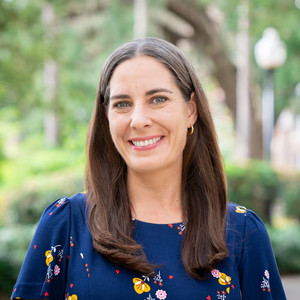

Kate A. Ratliff
- Media Contact
My research is in the area of attitudes and social cognition and generally seeks to understand how attitudes and stereotypes form and how they influence judgements and behavior. I use a variety of tools and methods for understanding bias in different domains, though most of my research is focused on intergroup attitudes.
Most recently, my lab has been looking at the role of public and institutional policy in shaping how people think and feel about their own and others' social groups. With this in mind, I have two main lines of research planned for the coming years: (1) developing a theoretical model that accounts for when, why, and how laws and policies affect intergroup attitudes and stereotypes; and (2) understanding the role of migration and residential mobility in shaping individual and regional intergroup attitudes and stereotypes.
Honors and Awards
Show AllCareer Honors and Awards
Teaching and Mentoring
Public or Private Service
Primary Interests:
- Attitudes and Beliefs
- Person Perception
- Persuasion, Social Influence
- Prejudice and Stereotyping
- Research Methods, Assessment
- Social Cognition
Research Group or Laboratory:
Note from the Network: The holder of this profile has certified having all necessary rights, licenses, and authorization to post the files listed below. Visitors are welcome to copy or use any files for noncommercial or journalistic purposes provided they credit the profile holder and cite this page as the source.
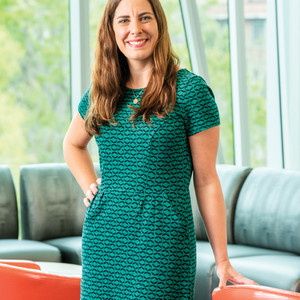
Image Gallery
Video Gallery

A Brief Conversation With Dr. Kate Ratliff About Intergroup Relations
Out of the Lab: Brian Nosek Interviewed by Colin Tucker Smith and Kate Ratliff
Description
During this session at the SPSP 2024 Annual Convention, Colin Tucker Smith and Kate Ratliff of the University of Florida interview their former mentor, Brian Nosek, of the Center for Open Science.
Journal Articles:
- Campbell, J. T., Lofaro, N., Vitiello, C., Jiang, C., & Ratliff, K. A. (2022). Fat identity and weight-related beliefs among Black, Black/White Biracial, East Asian, Hispanic/Latino, Native American, South Asian, and White U.S. Americans. Body Image, 42, 205-212.
- Chen, J., & Ratliff, K. A. (2018). Psychological essentialism predicts intergroup bias. Social Cognition, 36, 301-323.
- Greenwald, A. G, Brendl, M., Cai, H., Cvencek, D., Dovidio, J., Friese, M., Hahn, A., Hehman, E., Hofmann, W., Hughes, S., Hussey, I., Jordan, C., Kirby, T. A., Lai, C. K., Lang, J. W., Lindgren, K. P., Mason, D., Ostafin, B. D., Rae, J., R., Ratliff, K. A., Spruyt, A., Wiers, R. W. (2022). Best research practices for using the Implicit Association Test. Behavior Research Methods, 54(3), 1161-1180.
- Hawkins, C. B., Lofaro, N., Umansky, E., & Ratliff, K. A. (2023). Understanding implicit bias (UIB): Experimental evaluation of an online bias education program. Journal of Experimental Psychology: Applied, 29(4), 887-902.
- Howell, J. L., Lofaro, N., & Ratliff, K. A. (2024). Responding to feedback about implicit bias. Social Psychology and Personality Compass, 18, e12926.
- Howell, J. L., Ratliff, K. A., & Smith, C. T. (2026). Comparing White and Black athlete racial activism: Examining NFL and NBA players’ choice of social justice uniform messages. Group Processes & Intergroup Relations, 29(2), 263-280.
- Jin, R., Calanchini, J., & Ratliff, K. A. (2025). County-to-county migration is associated with county-level racial bias in the United States. Scientific Reports, 15, 6392.
- Kurdi, B., Ratliff, K. A., & Cunningham, W. A. (2021). Can the Implicit Association Test serve as a valid measure of automatic cognition? A response to Schimmack (2019). Perspectives on Psychological Science, 16, 422-434.
- Lofaro, N., Irving, L., & Ratliff, K. A. (2023). Defensiveness toward IAT feedback predicts willingness to engage in anti-bias behaviors. Personality and Social Psychology Bulletin, 51(8), 1411-1430.
- Meijs, M. M., Ratliff, K. A., & Lammers, J., & (2019). Perceptions of feminist beliefs influence ratings of warmth and competence. Group Processes and Intergroup Relations, 22, 253-270.
- Murphy, M., +27 additional authors. (2021). Open science, communal culture, and women’s participation in the movement to improve science. Proceedings of the National Academy of Sciences, 117, 24154-24164.
- Navon, M., Ratliff, K. A., & Corneille, O. (2026). Individuating rather than group information dominates evaluations of members from nearly learned social groups. Journal of Experimental Social Psychology, 123, 104851.
- Ratliff, K. A., & Smith, C. T. (2024). The Implicit Association Test. Dædalus, Journal of the American Academy of Arts & Sciences, 153, 51-64.
- Ratliff, K. A., & Smith, C. T. (2022). Implicit bias as automatic behavior. Psychological Inquiry, 33, 213-218.
- Ratliff, K. A., Chen, J., & Lofaro, N. (2025). Institutional change affects perceived and personal intergroup bias. Personality and Social Psychology Bulletin, 51(12), 2556-2570.
- Ratliff, K. A., Howell, J. L., & Redford, L. (2017). Attitudes toward the prototypical environmentalist predict environmentally friendly behavior. Journal of Environmental Psychology, 51, 132-140.
- Ratliff, K. A., Redford, L., Conway, M. A., & Smith, C. T. (2019). Engendering support: Hostile sexism predicts voting for Donald Trump over Hillary Clinton in the 2016 U.S. presidential election. Group Processes and Intergroup Relations, 24, 578-593.
Kate A. Ratliff
Department of Psychology
University of Waterloo
200 University Avenue West
Waterloo, Ontario N2L 3G1
Canada
- Phone: (519) 888-4567, x40258
